
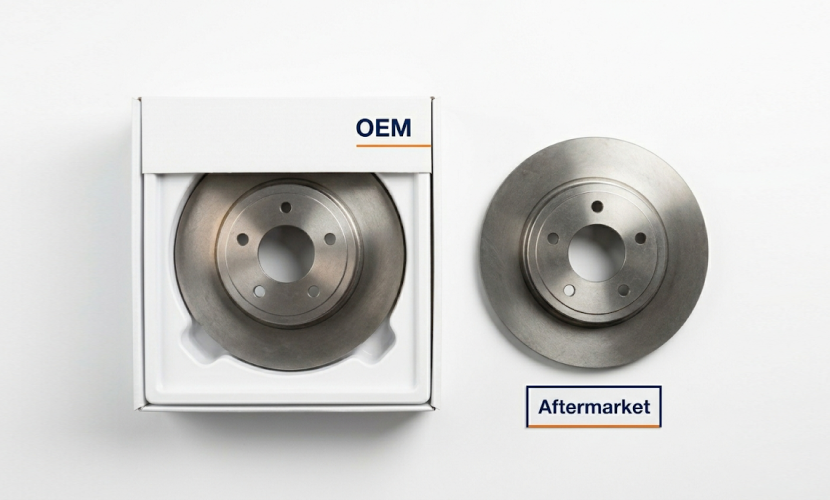
OEM vs. Aftermarket Parts: Which Should You Choose for Your Car?
Choosing between OEM (Original Equipment Manufacturer) and aftermarket parts depends on your budget, vehicle age, and specific part (and sometimes your insurance policy). OEM is best for sensors, electronics, and in-warranty vehicles; quality aftermarket for most other repairs.
Most drivers assume that OEM parts are always the safest bet because they come from the original equipment manufacturer. After four decades in the trade, we’ve learned it truly comes down to part quality, brand reputation, and the technician doing the work.
In Ontario specifically, freeze-thaw cycles and heavy road-salt use mean parts wear out faster, and the wrong choice costs you sooner. So when clients ask our Master Mechanics to compare OEM vs. aftermarket parts, we take it on a case-by-case basis. Let’s walk through our thought process.
What’s the Difference Between OEM and Aftermarket Parts?
OEM parts come from your vehicle’s manufacturer; aftermarket parts come from independent third-party companies.
Aftermarket manufacturers design replacement parts to fit different brands and models. They’re not always factory-precise, vary greatly in price and quality, but are often cheaper than OEM parts.
Here’s a quick rundown of the key differences between OEM vs aftermarket parts:
| Factor | OEM Car Parts | Aftermarket Parts |
|---|---|---|
| Made by | Car manufacturers or approved Tier 1 suppliers (like Bosch) | Independent third-party manufacturer |
| Fit | Exact fit for your make and model | Designed to fit different brands (can vary) |
| Quality | Consistent, manufacturer-tested | Varies widely by brand |
| Cost | Higher *may include brand and dealer markup | Lower *competition drives prices down |
| Availability | Dealerships and licensed shops only | Most repair shops, auto parts stores, online shops |
| Warranty | 12 to 24 months (from manufacturer) | Varies (reputable brands offer comparable coverage) |
| Best for | In-warranty vehicles, sensors, electronics, and collision repairs | Most routine repairs with a trusted brand |
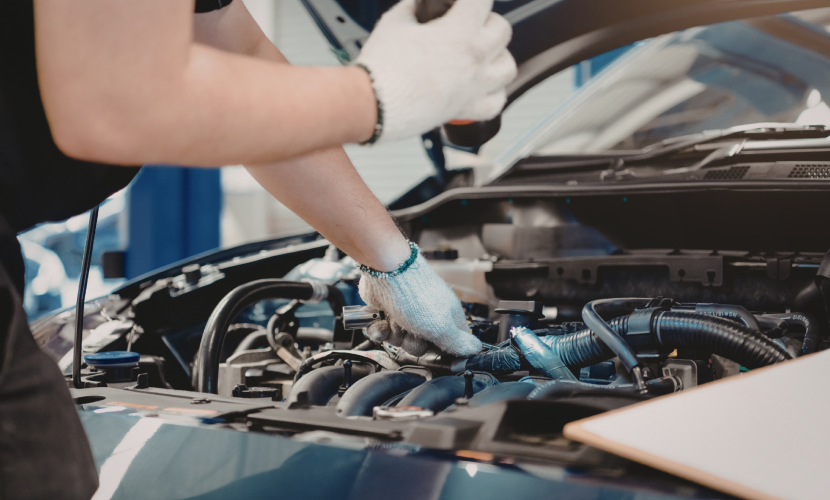
Ask a Master: When to Use OEM vs Aftermarket Car Parts
Source: Canva
OEM vs Aftermarket Parts: A Quick Guide by Repair Type
Whether to use OEM or aftermarket often comes down to what’s being fixed. Here’s how we approach it:
| Repair Type | Use | Why |
|---|---|---|
| Sensors & electronics | OEM | Generic sensors can trigger fault codes or fail early |
| Engine & transmission | OEM | Tolerance precision is too critical to risk |
| In-warranty vehicles | OEM | Protects factory warranty with zero ambiguity |
| Brake pads & rotors | Quality aftermarket | Reputable brands like Brembo work directly with manufacturers to replicate OEM tolerances (avoid economy-grade or unbranded options) |
| Suspension & steering | Quality aftermarket | Fitment matters; we avoid bargain-bin suppliers |
| Belts & hoses | Quality aftermarket | Gates and Dayco are industry standards |
| Filters (oil, air, cabin) | Aftermarket | Bosch, Fram, and WIX match OEM performance at a fraction of the cost |
| Body panels | OEM or Certified Automotive Parts Association (CAPA)-certified | Safety and fit are critical in collision repairs |
Disclaimer: General guide only. Mileage, repair history, and the specific failure all influence the final recommendation. Your Master Mechanic will factor in your specific situation before recommending anything.
Why Is OEM More Expensive Than Aftermarket?
OEM costs more because manufacturer testing, warranty coverage, dealership overhead, and brand markup are built into the price. You’re paying a premium for exact factory-spec replacement that fits your vehicle to a tee.
OEM parts also come through a more controlled supply chain, giving manufacturers full control over pricing. Aftermarket manufacturers compete to make compatible replacements, which drives prices down and gives drivers more options.
The tradeoff is that quality varies. Many aftermarket parts found online are of lower quality, or worse, counterfeits. In Ontario, where road salt and freeze-thaw cycles accelerate corrosion, a substandard part fails faster and costs more to fix down the road.
When sourcing parts for your vehicle, always work with Master Mechanics who can tell you which brands and shops are reliable.
When is OEM worth the extra cost?
- You’re within the factory warranty period and want zero ambiguity
- The repair involves a complex, electronically integrated component (transmission control modules, sensors, etc.)
- Your vehicle is rare, high-performance, or has unusual fitment requirements
- You’re repairing a safety-critical system and want guaranteed manufacturer specifications
When quality aftermarket makes sense
- Your vehicle is out of the factory warranty period
- You’re cost-conscious but don’t want to compromise on reliability
- The part is a commodity component (filters, belts, brake pads, rotors, batteries)
- You need discontinued or hard-to-source parts from the dealer
At Master Mechanic, every repair comes with a 12-month/20,000 km warranty on parts and labour, whether we use OEM or high-quality aftermarket parts. Our Master Mechanics will walk you through your options.
Image Source: Canva
FAQ
Yes. Many premium aftermarket brands, such as Bosch, Bilstein, and Denso, manufacture parts at the same level as OEM. Some aftermarket parts come from the same Tier 1 suppliers that produced your OEM part. For example, Bosch supplies both automakers and the aftermarket, just packaged differently and sold for less.
No, aftermarket parts don’t automatically void warranties. In Canada, the Competition Act and consumer laws prevent manufacturers from voiding coverage for using third-party parts or services. Unless the manufacturer proves the aftermarket part caused the specific failure, your warranty stands.
Under Ontario’s standard auto policy, the choice of OEM or aftermarket parts in a repair belongs to your insurer, not you. Insurers frequently opt for the aftermarket to reduce claim costs, though you can request OEM and cover any price difference yourself.
Ask your technician directly. A reputable shop will tell you exactly what’s going on in your car, where it came from, and why they’re recommending it.
If you’re buying parts independently, check that:
- The part number matches your vehicle manufacturer’s catalogue
- The packaging is branded (unbranded boxes mean aftermarket or worse)
- The seller is a licensed dealership or shop (if online, ensure it’s the legitimate dealer store)
- The price is in line with dealer cost (too good usually means not genuine)
Key Takeaways
- OEM (Original Equipment Manufacturer) parts come from your vehicle’s manufacturer; aftermarket parts come from independent third-party companies.
- OEM parts typically cost more but aren’t always superior. Reputable aftermarket brands like Bosch, Denso, and Brembo often match OEM standards.
- Avoid economy-grade and unbranded parts, especially from online marketplaces. Many are lower quality or counterfeit.
- Canadian law protects your warranty when using aftermarket parts unless the manufacturer proves they caused damage. Consult your technician to find the best part for your needs.
Not Sure Which Parts re Right for Your Next Repair?
The OEM vs. aftermarket parts debate doesn’t have a single right answer. That’s why at Master Mechanic, we recommend based on your vehicle, your warranty status, your budget, and the specific repair.
Ready to make the right call for your vehicle? Book an appointment at your local neighbourhood shop and let’s figure out your best choices together.